Interleaving Paper vs PE Film for Steel Coil Protection

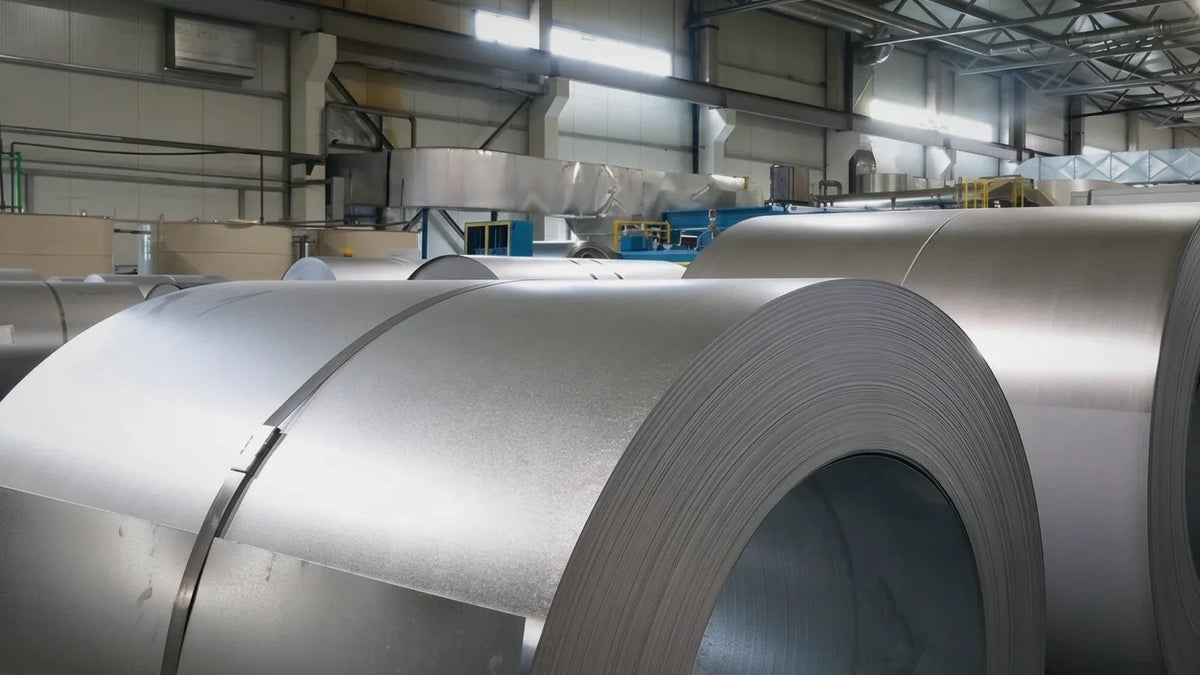
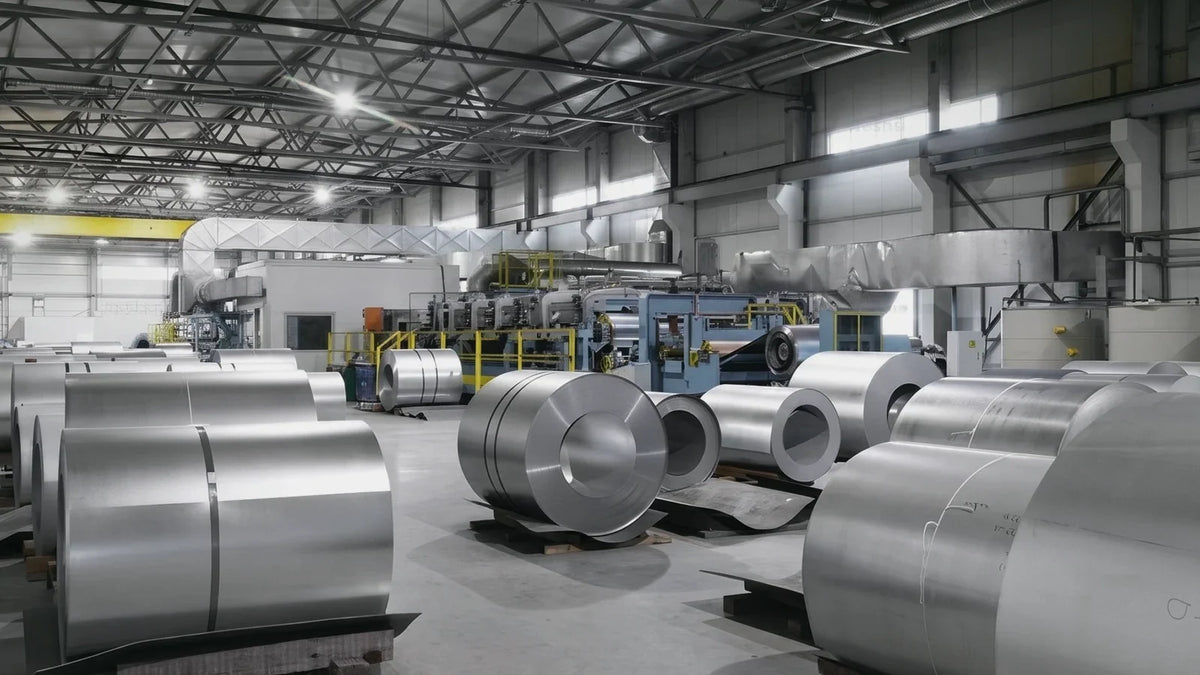
Interleaving paper vs PE film on steel coils is not a straight swap. Paper separates wraps, takes up a little oil and moisture and leaves no adhesive. As a rule: between coil wraps, use paper; on a finished face that must stay covered through cutting, use adhesive PE film; for sea freight, use both.
Key takeaways
- Interleaving paper, interleaving film and protective film do different jobs; decide which job you need first.
- Between coil wraps, paper separates, can take up traces of oil and moisture, and leaves no adhesive.
- Adhesive protective film is the choice when the finished face must stay covered through fabrication and installation.
- In sea-freight packs, paper and PE film work together; storage climate matters more than either.
What is the difference between interleaving paper, interleaving film and protective film?
They are three different products, and most "paper or film" arguments compare two of them that do different jobs. Interleaving paper and non-adhesive interleaving film both go between the wraps of a coil or the sheets in a stack. Adhesive protective film is laminated onto the surface and stays there until the part is fabricated or installed.
Table 1. Interleaving paper, interleaving film and protective film
| Material | Where it sits | Adhesive | Removed when | Main job | Main risk |
|---|---|---|---|---|---|
| Interleaving paper | Between coil wraps or sheets | No | At uncoiling or the next process | Separates surfaces, can take up traces of oil and moisture | Paper that is wet, dusty or high in soluble salts |
| Interleaving film (non-adhesive PE) | Between coil wraps or sheets | No | At uncoiling or the next process | Smooth, water-resistant separation | Condensation held against the steel |
| Protective film (adhesive PE) | Laminated on the finished face | Yes | After fabrication or installation | Protects the face through cutting, forming, transport and fitting | Adhesive ageing and residue |
The coil line rarely forces the choice. Automatic interleaving units at the entry or exit of a coil processing line can be built to lay either paper or plastic film between metal strips, for example on bright copper, brass and stainless steel for appearance-critical applications such as appliances, vehicle trim and transit vehicle exteriors.
The Specialty Steel Industry of North America advises keeping paper or other protective wrapping on stainless steel until processing is complete [1]. Which wrapping depends on the step, the finish and how long the steel will wait. Kaifeng Paper supplies interleaving paper, not film, so the comparison below is written from the steel user's side.
When is paper the better interleaf?
In steel mills and service centres, paper is the usual choice between the wraps of a coil. It has four strengths there.
- Separation and cushioning. It keeps wraps and sheets apart through winding, slitting, handling and transport, and evens out small surface irregularities.
- Oil and moisture uptake. It can take up small amounts of residual rolling oil or moisture instead of holding them as a film against the steel. In coil packs for sea transport, the paper layer is the one that binds moisture forming inside the packaging [2].
- No adhesive. Nothing has to be peeled off later, and nothing ages on the surface.
- One step. Paper goes in on the interleaving unit and comes out at uncoiling, with no separate laminating or peeling step.
All of this assumes clean paper with controlled chemistry. Stainless steel is the most sensitive case: the Australian Stainless Steel Development Association notes that when relative humidity exceeds 55%, chlorides can absorb moisture, breaking down the passive film and causing rust spotting [4]. A paper that sits against the steel for weeks should add as little as possible to that load, which is why steel customers set a chloride maximum for interleaving paper.
Kaifeng's interleaving paper for stainless coils and sheets is listed on its product page at 25–45 g/m² and pH 7.0 ± 1.0. Water-soluble chloride and sulphate limits come from the steel customer's specification, written as maximums with the test method and extraction conditions.
Buying interleaving paper for steel coils or sheets?
Send your coil width, steel finish, storage time and annual paper volume. We quote interleaving paper for your steel coil line.
Industrial papers from Kaifeng for metal coils
When is PE film the better choice?
Film is the better answer in three situations.
- The finished face needs protection after the coil is opened. Once a sheet is cut from the coil, interleaving paper falls away. If the face must stay protected through laser or mechanical cutting, bending, transport and installation, the user needs an adhesive protective film on the surface. Paper cannot do that job.
- Liquid water must be kept out. PE film is a water barrier and paper is not. That is why film is a standard layer in coil packaging, as shown in the next section.
- The customer specifies film. If your customer's specification calls for film on a mirror-polished or decorative finish, follow it, and agree the film grade and removal window with them.
Film has limits too. The SSINA warns that adhesive-backed papers, plastic sheets and tapes age over fairly short periods and become extremely difficult to remove, and advises asking the manufacturer how long protective films or paper can be left in place [1]. ASSDA advises minimising extended exposure to sunlight for plastic-wrapped stainless steel, to prevent polymer and adhesive degradation [4]. Plan removal dates into the job.
Non-adhesive interleaving film sits in the middle. It is smooth and water-resistant, but PE does not absorb water, so any condensation that forms inside the coil stays on the steel.

Does PE film cause condensation on steel coils?
Both materials have a place in a coil pack, and most damage comes from the pack as a whole. The German insurers' Transport Information Service (TIS-GDV) lists the usual causes of rust damage on steel coils: seawater, rain, condensation in the means of transport, cargo sweat and condensation inside the packaging [2]. Temperature variations during transport can form condensation inside the pack.
For pickled and oiled hot-rolled coils and for cold-rolled coils on sea transport, TIS-GDV describes a pack in layers [2]:
- Paper first. A fibre-reinforced packaging paper or plastic-coated kraft paper, with the coated side facing out, to bind moisture that forms inside the pack. Unoiled cold-rolled coils get a corrosion protection paper, such as VCI paper, instead.
- Film second. PE film at least 150 µm thick, or two thinner films such as 2 × 100 µm.
- Both into the eye. Paper and film should reach at least 30 cm into the coil eye on both sides.
- Outer cover. Scrap sheet steel over the circumference, ends and eye, with edge protectors.
Two further points from TIS-GDV matter for material choice. Galvanised coils are packed without corrosion protection paper, because its agents could react with the zinc surface; white bloom can still form from condensation inside the pack, and an additional ply of paper can help avoid it. And the pack should be marked not to unwrap until the steel reaches room temperature, because the temperature of the steel decides whether it sweats [2]. TIS-GDV also cites VDI 3319 Part 1, a packaging guideline for slit strip and coils of steel, which is worth asking your customer about if they have their own packing rules.
TIS-GDV also gives the climate steel needs: corrosion begins at about 40% relative humidity and accelerates rapidly above 60% [2]. Paper inside a pack can only buffer a small amount of moisture. Coils stored above those levels for long periods need a controlled storage climate, whichever interleaf is used.

Interleaving paper vs PE film: which to use at each process step?
Table 2 sets out the usual choice by step and finish. Finish codes follow EN 10088-2: 2B is cold rolled, heat treated, pickled and skin passed; 2R is bright annealed; 2J and 2K are brushed or satin polished [3]. Rows marked [2] follow TIS-GDV; the rest is a starting point for the conversation with your customer, not a rule.
Table 2. Paper or film by process step and finish
| Process step, finish or application | Usual choice | Why | What to specify |
|---|---|---|---|
| Cold-rolled coil, between wraps | Interleaving paper | Separation, takes up traces of oil | Basis weight, tensile, pH, chloride, sulphate |
| 2B after annealing and pickling | Interleaving paper | Chemistry matters most | pH, chloride, sulphate, moisture |
| 2R (bright annealed) and mirror finishes | Paper with high smoothness, or film if the customer specifies it | Visible marks on a reflective surface | Smoothness both sides, dust; film adhesive and removal time |
| 2J, 2K (brushed, satin) | Interleaving paper; protective film for architectural parts | Scratches on the finish | Smoothness, dust; film grade |
| Slitting | Interleaving paper | Runs on the slitter, no adhesive | Tensile and tear strength, roll quality |
| Cut sheets, stacked | Paper between sheets; film where faces must stay covered | Sticking, handling, later fabrication | Basis weight, stiffness; film type |
| Laser cutting, bending, installation | Adhesive protective film | Protection must stay on the part | Film grade for the process, removal window |
| Sea transport, outer pack | Paper inner layer plus PE film [2] | Moisture binding plus water barrier | Layer sequence, film thickness, eye coverage |
| Galvanised coils | No corrosion protection paper in the pack [2] | Reaction with zinc | Pack specification |
If you also buy for carbon steel, galvanised or aluminium coils, write a separate specification for each metal, and ask each supplier which of its grades it recommends for each one, and why.
How do paper and film compare on cost?
Compare the cost of the whole job, not the price per tonne or per roll. Material cost is easiest to compare per square metre covered: for paper, one tonne covers 1,000,000 ÷ grammage square metres, so a 30 g/m² grade covers 33,333 m² and a 40 g/m² grade 25,000 m², a third more area for the lighter grade at the same tonnage. Then add the items that do not appear on the invoice.
Table 3. Cost items to compare
| Cost item | Interleaving paper | Interleaving film | Protective film | How to measure |
|---|---|---|---|---|
| Material per m² | Grammage and price | Thickness and price | Thickness, adhesive and price | Quote per m² of steel covered |
| Laying | Automatic interleaver | Automatic interleaver | Laminator, often a separate step | Line speed, labour per coil |
| Removal | Falls away at uncoiling | Falls away at uncoiling | Peeling by fabricator or installer | Minutes per part, customer complaints |
| Surface defects | Scratches, marks, staining | Moisture marks | Adhesive residue, ageing | Reject and rework rate |
| Waste handling | Paper stream | Plastic stream | Plastic stream, with adhesive | Your waste contractor's conditions |
One extra reject per batch can outweigh the material saving of a lighter or cheaper interleaf, so count rework and complaints in the same table.
What happens to the paper and film after use?
Paper and PE film go to different waste streams. What a waste contractor will take depends on its own conditions, including how much rolling oil, adhesive or other contamination the material carries. Check with your waste contractor before you switch materials, and keep the two streams separate on the line. Claims about recycling or end of life, for either material, need evidence before you pass them on to your own customers.
Questions to send with your RFQ
- What are your water-soluble chloride and sulphate limits, with the test method and extraction conditions?
- Are the figures typical values or maximums?
- Which of your grades do you recommend for each of our metals and finishes, and why?
- Does your ISO certificate scope cover the grade we are buying?
- Can you quote per square metre of steel covered, as well as per tonne?
- For film: how long can the protective film stay in place before removal?
How to trial paper against film on your own line
Run both on the same steel and judge them on the same evidence.
- Set the criteria. Scratches, pressure marks, staining or rust spots, adhesive residue, coil telescoping, uncoiling behaviour and labour time.
- Use matched coils. Same steel, same finish, same process step, one coil or stack per material.
- Store and ship them realistically. Follow your normal storage time and route. Add temperature and humidity cycling if your customers are overseas.
- Inspect at the customer's end. Uncoil, inspect under the lighting used for final inspection and photograph defects.
- Cost both. Use Table 3, per square metre of steel shipped.
Agree before the trial who inspects at the customer's end and what counts as a defect, so the result is not argued afterwards.
Compare paper and film on your own steel
For the properties to put on the purchase order, see how to specify interleaving paper for stainless steel coils. To run that comparison on your own steel, compare paper and film on a trial coil.
- Share your coil width, steel finish and the process step where the paper goes in.
- Tell us the storage time, transport route and annual paper volume.
- We quote interleaving paper for your steel coil line.
FAQs
Is interleaving paper better than plastic film for steel coils?
It depends on the job. Between the wraps of a coil, paper is usually the better choice: it separates, can take up traces of oil and moisture and leaves no adhesive. When a finished face must stay covered through cutting and installation, adhesive film is the answer. In sea transport packs, paper and PE film are used together.
Does a supplier's certificate cover the interleaving paper I buy?
Check the scope on the certificate, not the logo. A quality or environmental certificate covers the products named in its scope. Kaifeng Paper's ISO 9001, ISO 14001 and ISO 45001 certificates name stainless steel interleaving paper in their scope, together with tipping base paper and food packaging paper.
How long can protective film stay on stainless steel?
There is no fixed limit. Industry guidance warns that adhesive-backed films, papers and tapes age over fairly short periods and become hard to remove, and advises asking the film manufacturer how long they can stay in place. Minimise long sun exposure on filmed or plastic-wrapped material and set a removal date in the job plan.
Can interleaving paper be reused on steel coils?
Some processors reuse clean, dry paper on less critical work. On bright or polished finishes, reused paper can carry dust, fibres and oil back into the coil, which are the defects it is meant to prevent. If you reuse paper, set a written rule for inspecting it and keep reused paper off critical finishes.
What thickness of PE film is used for coil packaging?
For the outer packaging of coils on sea transport, TIS-GDV gives PE film of at least 150 µm, or two thinner films such as 2 × 100 µm, over an inner paper layer, with both reaching at least 30 cm into the coil eye. Interleaving film and adhesive protective film are chosen separately, by process and finish, with the film supplier.
Is VCI paper the same as interleaving paper?
No. Interleaving paper is a physical separator. VCI paper carries a corrosion inhibitor that works by vapour inside a closed pack. Transport guidance packs unoiled cold-rolled coils with corrosion protection paper, but leaves it out of galvanised coil packs because it can react with the zinc. Check the metal before choosing a VCI product; for what to write into the order, see how to specify anti-rust paper for metal parts.
Why do coils telescope, and does the interleaf matter?
Telescoping happens when wraps slide sideways out of line under handling or transport loads. Winding tension, coil build, strapping and handling are the first things to check. If it starts after a change of interleaf, from paper to film or between two papers, run matched coils with each material and compare before you change anything else.
Compliance note: the choice of interleaving and packaging materials follows the steel producer's and end customer's specifications. Parameters quoted from Kaifeng product pages are subject to Kaifeng's current specification sheets and test reports.
Sources
- Specialty Steel Industry of North America. "Care and use in shop". SSINA, n.d. https://www.ssina.com/education/fabrication/care-and-use-in-shop/ Accessed Nov 2026.
- TIS-GDV Transport Information Service. "Steel sheet in coils". Gesamtverband der Deutschen Versicherungswirtschaft, n.d. https://www.tis-gdv.de/tis_e/ware/stahl/coils/coils.htm Accessed Nov 2026.
- Euro Inox. "Guide to Stainless Steel Finishes" (Building Series, Vol. 1, 3rd edition). Euro Inox, 2005. https://www.edelstahl-rostfrei.de/fileadmin/user_upload/ISER/downloads/Finishes02_EN.pdf Accessed Nov 2026.
- Australian Stainless Steel Development Association (L. Pilcher). "Storage and handling of stainless steel". ASSDA, 2024. https://www.assda.asn.au/blog/370-storage-and-handling-of-stainless-steel Accessed Nov 2026.