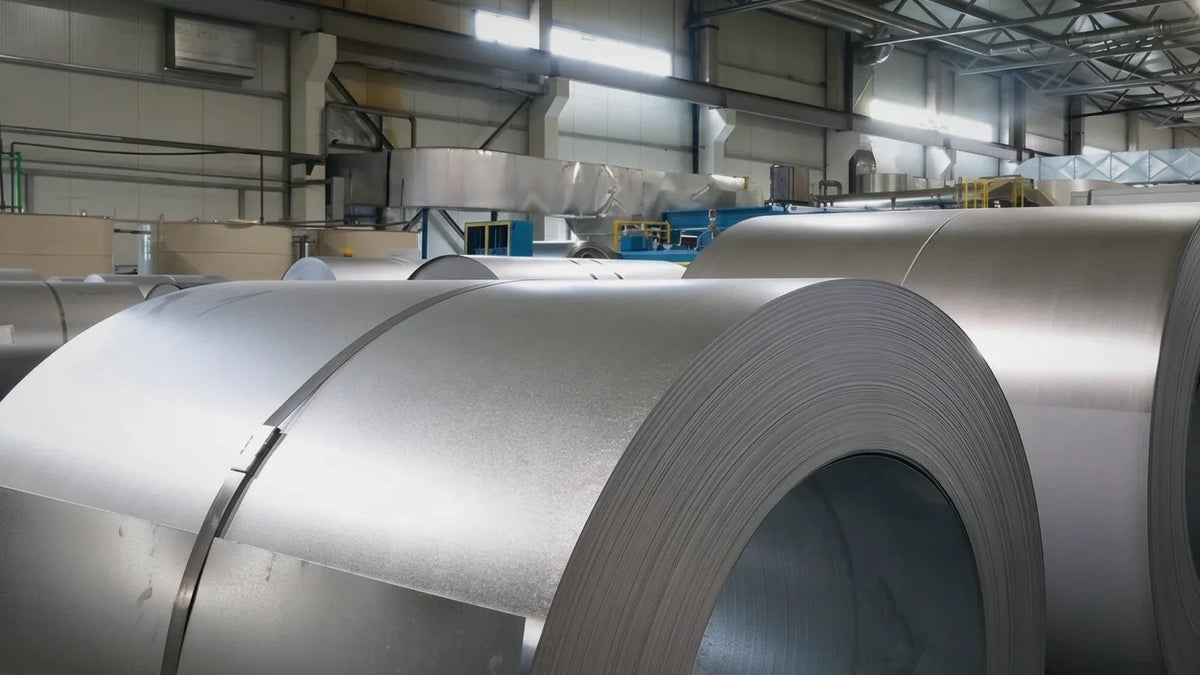
How to Specify Anti-Rust Paper for Metal Parts and Shipping

To specify anti-rust paper, decide first whether you need finished VCI paper or plain base paper for coating. Then state every metal in the pack, grammage, any PE or wax barrier, roll or sheet format, and the evidence required: a named corrosion test with its result, a safety data sheet and a dated batch label.
Key takeaways
- Decide first whether you need finished anti-rust paper or base paper to coat.
- Choose construction, grammage and any barrier by route, part weight and the metals in the pack.
- Size VCI paper by the air volume in the pack, and ask for the inhibitor loading.
- Ask for a named test with its level, a safety data sheet, REACH and TRGS 615 information, and dated roll labels.
If you coat your own inhibitor, send your grammage, roll width, coating method and annual tonnage, and we will quote VCI base paper for your coating line.
Are you buying finished anti-rust paper or base paper?
Most buyers need finished anti-rust paper: paper that already carries a corrosion inhibitor and goes straight around the part. Base paper is the untreated sheet that a converter coats or impregnates with its own inhibitor. It does not protect metal on its own.
Already carries a corrosion inhibitor and goes straight around the part. Most buyers need this.
The untreated sheet a converter coats or impregnates with its own inhibitor. It does not protect metal on its own.
The name "anti-rust paper" also covers products that work in different ways:
- VCI paper releases a volatile corrosion inhibitor into a closed pack.
- Oil- or wax-impregnated rust paper passes a protective film to the metal by contact.
- VCI base paper is a carrier with no inhibitor yet.
Retail listings mix VCI paper, waxed VCI paper and oiled rust paper under the same search term, so check which one a listing describes before comparing prices.
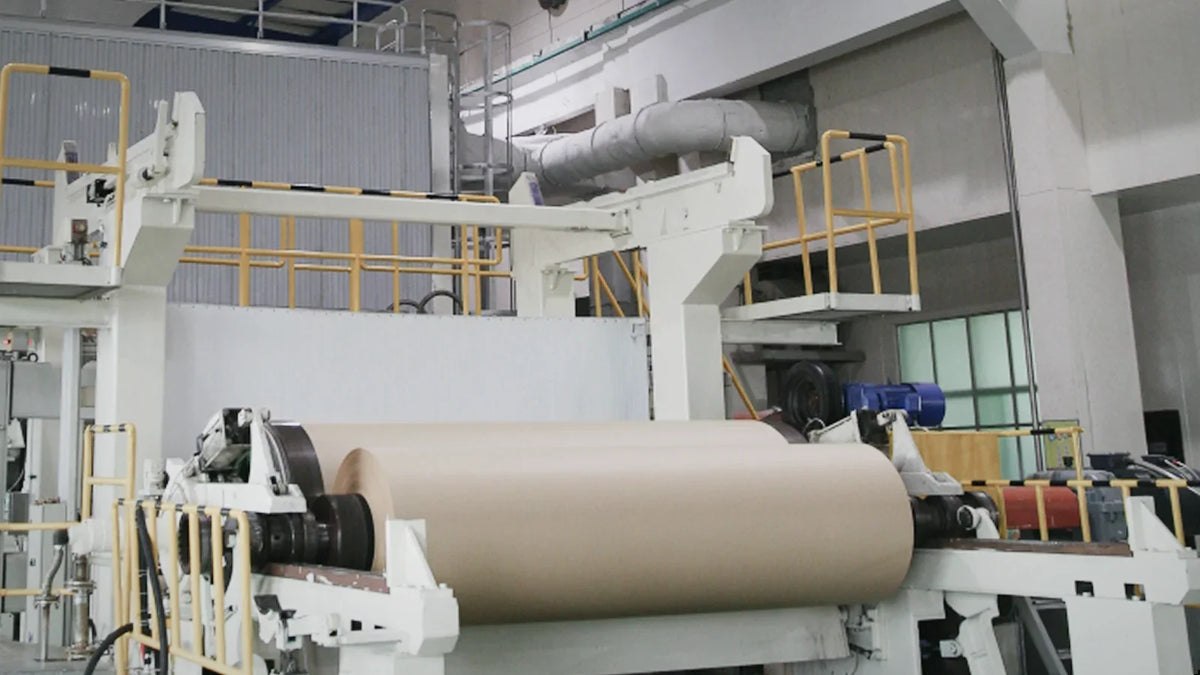
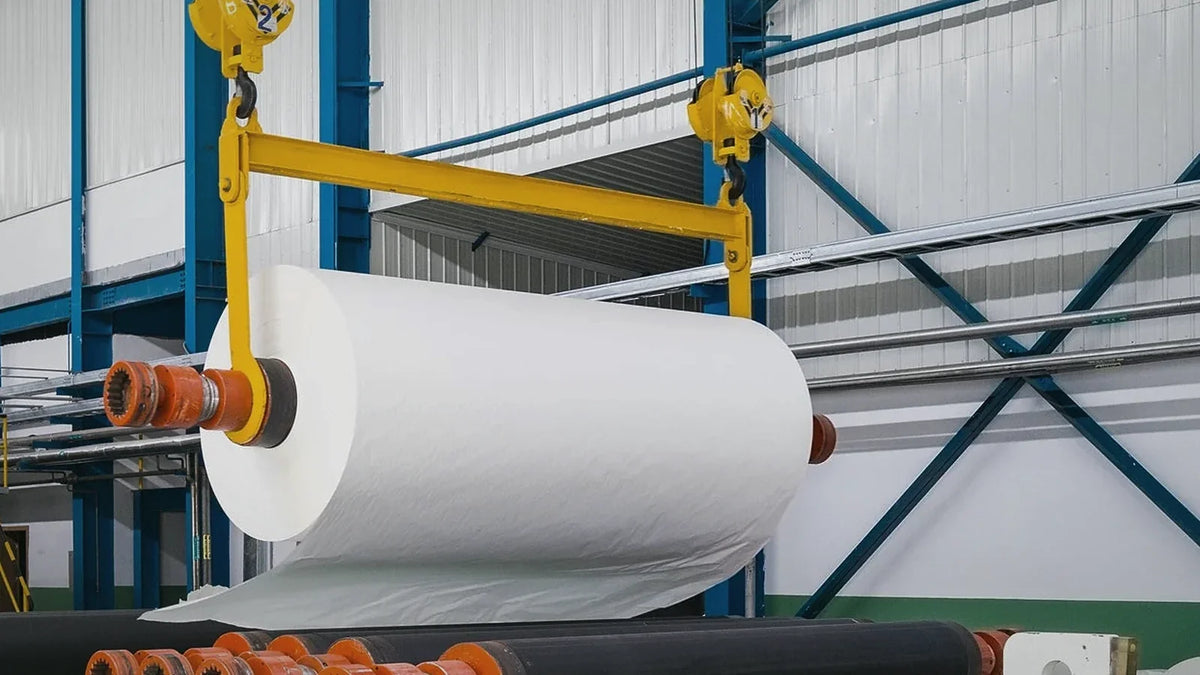
Kaifeng Paper's rustproof base paper, a carrier for VCI coating and impregnation, is listed on its product page at 40–60 g/m², pH 6.5–8.0 and chloride below 200 ppm.
Which anti-rust paper construction suits your parts?
Choose the construction by how the parts are packed, how long they travel and what happens to them next. Table 1 sets out the common types.
Table 1. Anti-rust paper constructions compared
| Construction | What it adds | Typical use | Check before buying |
|---|---|---|---|
| VCI kraft paper | Inhibitor in or on a plain kraft sheet | Wrapping or interleaving parts inside a closed box or bag | Metals covered; inhibitor loading |
| VCI paper with PE coating | A moisture barrier on one side | Damp storage, sea freight, packs that are hard to close | Which side faces the metal; evidence for any end-of-life claim |
| Reinforced or creped VCI paper | Tear and puncture resistance | Heavy parts, sharp edges, coil and sheet wraps | Tensile and tear values |
| Oil- or wax-impregnated paper | A contact film on the metal | Parts that will be cleaned or oiled later anyway | Whether parts need degreasing |
| VCI base paper | Nothing until a converter treats it | Converters' coating and impregnation lines | Chemistry, absorbency, reel format |
For steel sheet, the German insurers' Transport Information Service (TIS-GDV) describes a first ply of fibre-reinforced or plastic-coated kraft paper, and recommends a corrosion protection paper such as VCI paper in its place for unoiled cold-rolled sheet [1].
The formulation, not the paper, decides which metals are covered, and TIS-GDV says protective action and compatibility must be checked with the manufacturer [2].

Questions to send with your RFQ
- Which metals and coatings does this grade cover: ferrous only, or a named list?
- What is the inhibitor loading in g/m²?
- Which side faces the metal, and is it marked on the roll?
- Which named test, level, metals and date back the protection claim?
- What is any recycling or end-of-life claim based on?
Coating your own inhibitor?
Send your grammage, roll width, coating method and annual tonnage. We quote VCI base paper for your coating line.
Metal protection papers from Kaifeng
What grammage should anti-rust paper be?
Kaifeng's product page lists its rustproof base paper at 40–60 g/m². Choose by the job the paper has to do:
- Interleaving light components in a tray or box: a lighter sheet is easier to fold and lay flat.
- Wrapping heavy or sharp-edged parts: a heavier or reinforced paper resists tearing at corners.
- Machine wrapping or long rolls: specify tensile and tear values as well as grammage.
Write grammage as a target with a tolerance, and name the method; ISO 536 is the usual one for paper and board [5]. For base paper, ask for the strength and absorbency lines too. As an example, Kaifeng's product page lists, for the 40–60 g/m² range, tensile strength of at least 3.0–3.5 kN/m MD and 1.5–2.2 kN/m CD, wet tensile of at least 0.25 kN/m MD and bursting strength of at least 150–220 kPa, each varying with grammage. Check that the figure is the same everywhere on a quotation, since product titles and descriptions sometimes disagree.
A complete grammage line: target, unit, tolerance and method. The range shown is from Kaifeng's rustproof base paper product page.
When does anti-rust paper need a barrier layer?
When the pack cannot be fully closed, or the route brings damp, heat or long storage. A barrier slows moisture coming in and keeps inhibitor vapour in the pack. It can be a PE coating on the paper itself or a separate film over the wrapped parts.
For cold-rolled steel sheet, TIS-GDV recommends a PE film at least 150 µm thick as the second ply over the paper layer, or two plies of thinner film such as 100 µm [1]. The water vapour permeability of PE film rises with temperature, while aluminium composite films are largely insensitive to it [2]. Under current DIN standards, permeability is stated at both 20 °C and 40 °C [2], so for hot routes compare the 40 °C figures.
Check coated metals separately
TIS-GDV lists galvanised steel among the metals the VCI method is used for [2], but its steel sheet guidance says corrosion protection agents such as VCI paper should not be used on galvanised and tinned sheet, because they could react with the coating [1]. Ask for test data on the exact coating before you wrap it in VCI paper.
A PE coating also changes how the paper is handled as waste, so ask what any claim about recycling or end of life for a coated grade is based on.
How much VCI paper does a pack need?
Size it by the air volume inside the pack, not by the number of parts. TIS-GDV gives about 40 g of active substance per cubic metre of air volume [2].
A worked example:
- A crate measuring 1.2 m × 1.0 m × 0.8 m holds about 0.96 m³.
- At 40 g per m³, that is about 38 g of active substance.
- Paper area needed = 38 g ÷ the inhibitor loading of the paper in g/m².
The last step only works if the supplier states the inhibitor loading, or its own coverage figure per cubic metre. Put that in the specification. Keep the pack closed and the paper close to the parts: TIS-GDV says the VCI material should be no more than 30 cm from the item, and the volume should be kept from losing vapour to moving air [2].

What test evidence should you ask for?
A named test method, the result or level achieved, the metals tested, the laboratory and the date. "Long-lasting protection" without those details is a sales claim, not evidence.
Some UK listings say a paper is tested and approved to the German TL 8135-0002 specification. If a listing says that, ask for the test report, the result or level it records and the metals tested. Treat any other test method named on a data sheet the same way.
For each test report, check:
- the metals on the test panels match the metals in your pack
- the report names the product and batch you are buying
- the test date falls within the shelf life the supplier quotes
Which documents should come with each delivery?
Five documents cover safety, chemical rules and traceability.
- Safety data sheet for the inhibitor or the treated paper.
- REACH Article 33 information. If a substance of very high concern is present above 0.1% weight by weight, the supplier must give enough information for safe use [4].
- TRGS 615 confirmation for use in Germany. This technical rule restricts corrosion protection agents that may give rise to N-nitrosamines [3], and TIS-GDV notes that it covers VCI paper, film and foam [2].
- Roll labels showing product name, batch, production date, width and length, and which side faces the metal.
- Certificate of analysis for base paper, with pH, chloride and sulphate and the methods used.
How should you write the roll and sheet specification?
Use one sheet for both commercial and technical terms, so quotations can be compared line by line. Table 2 covers finished paper and base paper side by side.
Table 2. Anti-rust paper specification template
| Item | Finished anti-rust paper | VCI base paper (converters) |
|---|---|---|
| Construction | VCI kraft, PE-coated or reinforced | Untreated kraft-type sheet |
| Grammage | Target ± tolerance, ISO 536 | Target ± tolerance, ISO 536 |
| Metals covered | Every metal and coating in the pack | Set by the formulator |
| Inhibitor | Ferrous or multi-metal; loading in g/m² | None |
| Active side | Marked on the roll | Not applicable |
| Chemistry | Safety data sheet; REACH statement | pH, chloride, sulphate with methods |
| Strength | Tensile and tear for wrapping | Dry and wet tensile, burst, surface strength |
| Absorbency | Not usually specified | To suit the coating line |
| Format | Width × length, core, roll weight; or sheet size and count | Reel width, diameter, core, splices per reel |
| Packaging | Rolls sealed in their wrapper | Moisture-proof reel wrap |
| Labels | Batch, production date | Batch, production date, certificate of analysis |
| Evidence | Named test, level, report | Results after coating trials |
Converters should run a trial reel on their own line, coat it with their own formulation and test the coated paper before fixing the base paper specification.
What should you check on a supplier's listing before ordering?
Several problems can be spotted on a listing before anything ships, which makes the listing the first check in how to choose an anti-rust paper supplier. Check these points on each listing and quotation.
- Grammage. Check that the title, the description and the specification table give the same grammage, and that the quotation repeats it. If they differ, ask which figure the roll on sale meets.
- Metals. Check which metals the paper is said to protect: ferrous only, or a named list of non-ferrous metals. If one page offers more than one VCI grade, confirm which grade the roll on sale is.
- End-of-life claims. Ask what any claim about recycling or end of life is based on, especially for coated or waxed grades. A pack with a PE layer is a different case from plain kraft paper.
- Dates. Check there is a production date on each roll, so shelf life can be tracked.

Summary and next steps
- Decide first whether you need finished anti-rust paper or base paper to coat.
- Choose construction, grammage and any barrier layer by route, part weight and the metals in the pack.
- Size VCI paper by air volume, and ask for the inhibitor loading so the area can be calculated.
- Ask for a named test with its level, a safety data sheet, REACH and TRGS 615 information, and dated roll labels.
Ask for a base paper data sheet
To check a base paper against your coating line, ask for a base paper data sheet and quotation.
- Send your grammage, roll width and core.
- Tell us your coating method and annual tonnage.
- We quote VCI base paper for your coating line.
FAQs
What material is anti-rust paper made of?
Most anti-rust paper is a kraft paper base that carries a corrosion inhibitor, either impregnated through the sheet or coated on one side. Some grades add a PE or wax layer as a moisture barrier, and heavy-duty grades use reinforced or creped paper. Oil-impregnated rust papers work differently: they pass a thin oil film to the metal by contact rather than releasing a vapour.
Does anti-rust paper work on galvanised or tinned steel?
Do not assume it does. TIS-GDV's guidance on steel sheet advises against corrosion protection agents such as VCI paper on galvanised and tinned sheet, because they could react with the coating. TIS-GDV's general overview does list galvanised steel among the metals the VCI method is used for, so ask for test results on the exact coating and finish you ship. Without that data, use a different method, such as a barrier pack with desiccant.
What gsm is anti-rust paper?
Kaifeng's product page lists its rustproof base paper at 40–60 g/m²; finished VCI papers vary by supplier, so ask for the grammage of the exact grade. Lighter sheets suit interleaving small parts; heavier or reinforced grades suit heavy parts with sharp edges. Write the grammage with a tolerance and a test method such as ISO 536, and check it matches across the quotation and data sheet.
What should back a recycling or end-of-life claim for anti-rust paper?
Evidence for the exact product. It depends on the construction and the formulation: a plain VCI kraft paper is a different case from a PE-coated or waxed grade. Ask the supplier what the claim is based on, such as a test report or a certification for that grade. If a supplier cannot show it, treat the claim as unverified.
What is the difference between VCI paper and oil-based rust paper?
VCI paper releases an inhibitor that vaporises inside a closed pack and settles on the metal, so it can reach surfaces the paper does not touch. Oil-based rust paper passes a thin film of oil to the metal by contact. TIS-GDV notes that parts protected by VCI can be used straight from the pack, because the protective film evaporates by itself [6]; oiled parts may need cleaning before painting or assembly.
How much anti-rust paper do I need for a crate?
Work from the air volume inside the closed crate. TIS-GDV gives about 40 g of active substance per cubic metre. Multiply the volume in cubic metres by 40 to get grams of inhibitor, then divide by the paper's inhibitor loading in g/m², which the supplier should state. A crate of about 1 m³ needs around 40 g of active substance.
How should anti-rust paper rolls be stored before use?
Keep rolls in their original sealed wrapping until use, away from heat and direct sunlight, and use the oldest production date first. Once a roll is opened, wrap the remainder again so the inhibitor does not escape. Note the production date on each roll, because the supplier's stated shelf life runs from that date and only holds under its storage conditions.
Compliance note: corrosion protection depends on the formulation, the packaging, the parts and the storage conditions, and is the responsibility of the VCI supplier and the packer. Parameters quoted from Kaifeng product pages are subject to Kaifeng's current specification sheets and test reports.
Sources
- German Insurance Association (GDV), Transport Information Service. "Steel sheet in sheets". TIS-GDV, n.d. https://www.tis-gdv.de/tis_e/ware/stahl/tafeln/tafeln-htm/ Accessed Nov 2026.
- German Insurance Association (GDV), Transport Information Service. "Classification of corrosion protection methods". TIS-GDV, n.d. https://www.tis-gdv.de/tis_e/verpack/korrosio/schutz/schutz.htm/ Accessed Nov 2026.
- Bundesanstalt für Arbeitsschutz und Arbeitsmedizin (BAuA). "TRGS 615 Verwendungsbeschränkungen für Korrosionsschutzmittel, bei deren Einsatz N-Nitrosamine auftreten können". BAuA, 2007. https://www.baua.de/DE/Angebote/Regelwerk/TRGS/TRGS-615 Accessed Nov 2026.
- European Parliament and Council. "Regulation (EC) No 1907/2006 concerning the Registration, Evaluation, Authorisation and Restriction of Chemicals (REACH)", consolidated text of 23.06.2025. EUR-Lex, 2025. https://eur-lex.europa.eu/legal-content/EN/TXT/HTML/?uri=CELEX:02006R1907-20250623 Accessed Nov 2026.
- Cepi-CTS. "Handbook 5:1 List of properties for which samples are provided and their indicative ranges" (Rev. 45). Cepi, 2026. https://www.cepi.org/wp-content/uploads/2026/05/HB51-Properties-list.pdf Accessed Nov 2026.
- German Insurance Association (GDV), Transport Information Service. "Securing the packaged goods, inner packaging". TIS-GDV, n.d. https://www.tis-gdv.de/tis_e/verpack/verpackungshandbuch/11verpackungshandbuch_0443-htm/ Accessed Nov 2026.