How to Specify CTP Interleaving Paper: A Spec Template for Plate Makers

To specify CTP interleaving paper, write eight lines with a target, tolerance and method each: grammage, moisture, extract pH (cold or hot), extract conductivity, Bendtsen air permeance, smoothness per side, dirt count per m² by size class and OBA. Table 2 is a template to fill in for your coating and send to suppliers.
Key takeaways
- Eight lines, each with a target, tolerance and method: grammage, moisture, extract pH, conductivity, air permeance, smoothness per side, dirt count and OBA.
- There is no universal pH; the plate maker sets it for its coating, with a named extraction method.
- Give every property a target, a tolerance and a test method.
- Age the paper against your own plates and run it on your customers' platesetters before approving a pilot lot.
What does CTP plate interleaving paper do?
It keeps the coated face of one offset printing plate from rubbing against the aluminium back of the next while the coating is still unexposed. The paper between plates does four jobs:
It stops micro-scratches and other physical damage to the coating during packaging, transport and handling.
It keeps loose particles off the coating, where they can show up as imaging defects and lower print quality.
It covers each coating during handling, which limits premature exposure.
It lets an autoloader lift the paper away and pick up one plate at a time, without vacuum or static holding plates together.
Presensitised (PS) plates use the same kind of paper. The paper goes in at the plate line and comes out at the platesetter, where autoloaders remove it before imaging [2]. The specification is written by the plate manufacturer, but problems tend to surface in the pressroom. Metal coils use the same idea with different limits; see how stainless steel interleaving paper is specified.
Kaifeng Paper lists a CTP plate interleaving paper and a separate PS plate grade on its product pages; its application page describes the CTP use as thermal and UV plate protection.
Where does the paper sit between the plate line and the press?
From the end of the plate line to the platesetter, and each stage puts different demands on the sheet.
- Plate line. Cut plates are stacked with interleaving paper, fed from reels slit to the line width or as cut sheets.
- Packaging and transport. Stacks of plates and paper are wrapped and boxed. The paper takes the friction when the pack moves.
- Platesetter. On an automatic loader, the paper has to be recognised and removed before each plate is imaged. Fujifilm's PlateRite brochure describes a sensor that checks whether the top layer is a plate or interleaf paper; the paper is lifted away and ejected to an external collection box before each plate loads. Its SA-L8800 single-cassette autoloader holds up to 100 plates, while the smaller SA-L8100 autoloader needs the interleaf paper removed by hand [2].

The specification should therefore name the platesetters and autoloaders the paper has to run on.
Are CTP and PS plate interleaving papers the same?
Not quite. They do the same job, but plate type and loading method change the target values, as Kaifeng's two grades show.
Table 1. Kaifeng's CTP and PS interleaving grades (values listed on the product pages)
| Property | CTP Plate Interleaving Paper | PS Plate Interleaving Paper |
|---|---|---|
| Grammage | 35–50 g/m² | 30–37 g/m² ± 5% |
| Thickness | 48–69 µm | 40–49 µm (+5) |
| Moisture | 5.0% ± 1.0 | 6.0% (+2) |
| pH | 8.0 ± 1.5 | 7.0 ± 1 |
| Air permeability | 400 ± 200 ml/min (Bendtsen) | ≤ 2 µm/(Pa·s) |
| Cobb | 20 ± 5 g/m² | ≥ 30 g/m² |
| Dirt count | ≤ 0.5 mm²: ≤ 30; > 0.5 mm²: none | ≤ 0.5 mm²: ≤ 30 per m²; > 0.5 mm²: none |
| Optical brightener | Negative | Negative |
| Odour | ≤ 1 | ≤ 1 |
Ranges cover the whole grammage span of each grade. The CTP grade is also listed with an extract conductivity of 30 ± 20 µS/cm, and the PS grade with smoothness of ≥ 40 s and ≥ 15 s on its two sides.
The CTP grade is heavier, more open to air flow and sits at a higher pH. The PS grade is lighter and denser. Which one fits depends on the plate maker's coating, line and application, not on the name of the grade.
Buying interleaving paper for CTP or PS plates?
Send your plate type, grammage, reel width and annual volume. We quote against your plate line.
Interleaving papers from Kaifeng
Why is there no single correct pH for interleaving paper?
Because the right value depends on the plate coating, and coatings differ. The paper lies against the coating for weeks or months, and soluble acids or alkalis in the sheet can affect it, so the plate maker sets the pH range after testing the paper against its own plates.
Even Kaifeng's two grades sit at different values, 8.0 ± 1.5 for CTP and 7.0 ± 1 for PS (Table 1). A blanket rule such as "acid-free" or "neutral" is not a specification.
Write pH as a range, with the method. ISO 6588-1 measures the pH of a cold-water extract of the paper [3]; hot extraction is also used. State which one the figure refers to, and use the same one for incoming checks.
One line written out in full, using the CTP value on the Kaifeng product page. The page names no method, so agree the method and extraction with the supplier.
Which properties belong in an interleaving paper specification?
Every property needs a target, a tolerance or limit, and a test method agreed with the supplier. Table 2 lists the physical, mechanical and chemical properties that matter for plates, with Kaifeng's CTP grade as an example and commonly used methods [3].
Table 2. Interleaving paper specification template
| Property | Why it matters for plates | Example (Kaifeng CTP grade) | Method to agree |
|---|---|---|---|
| Grammage | Stiffness in the autoloader, stack height | 35–50 g/m² | ISO 536 |
| Thickness | Stack height and cushioning | 48–69 µm | ISO 534 |
| Moisture | Static, curl and sticking | 5.0% ± 1.0 | ISO 287 |
| pH of aqueous extract | Reaction with the coating | 8.0 ± 1.5 | ISO 6588-1 (cold) or a hot extraction method |
| Conductivity of extract | Soluble ions that can reach the coating | 30 ± 20 µS/cm | Agree with supplier, with extraction method |
| Air permeance | Vacuum release when the paper is lifted | 400 ± 200 ml/min | ISO 5636-3 (Bendtsen) |
| Smoothness, each side | Abrasion of the coating | ≥ 40 s / ≥ 15 s (PS grade) | Bekk, ISO 5627 |
| Dirt count | Specks transferred to the coating | ≤ 30 up to 0.5 mm²; none larger | TAPPI T 437, T 563 or supplier method |
| Optical brightener | Plate maker requirement | Negative | Agree with supplier |
| Tensile MD / CD | Mechanical strength for reel feeding on the plate line | ≥ 2.1–3.0 / ≥ 1.1–1.5 kN/m | ISO 1924-2 |
Dust and dirt count
Particles on the coating are the most direct way a paper causes defects. Specify dirt by size class, as a count per square metre, as Kaifeng's PS page does. TAPPI T 437 estimates dirt in paper and board visually, as equivalent black area, and TAPPI T 563 is the instrumental method using image analysis [4]; some manufacturers count specks with their own method, so name the method next to the limit.
Extract pH and conductivity
Conductivity of a water extract is a quick measure of the soluble ions in the sheet. The figure means little without the extraction and method behind it. If your coating is sensitive to particular ions, ask for chloride and sulphate figures as well; Kaifeng's CTP grade is washed to remove halogens and sulphates.
Air permeance
A dense sheet can hold a vacuum against the plate, so the loader lifts paper and plate together. Kaifeng's application page describes PS interleaving paper as preventing vacuum adhesion and static build-up between stacked plates. The Bendtsen method, ISO 5636-3, reports air permeance in ml/min [3]. Bendtsen air permeance in ml/min and air permeability in µm/(Pa·s) come from different methods, so compare offers in one unit.
Physical properties: surface, moisture and stiffness
Give smoothness for each side, because one side faces the coating and the other the aluminium. Moisture affects static and curl, especially after long storage or in high humidity; a sheet that is too limp can fold in the loader.
Questions to send with your RFQ
- Which test method stands behind each figure on the data sheet?
- Is the pH result from a cold or a hot extract?
- Which extraction and method does the conductivity figure come from?
- Which dirt count method do you use, and per what area?
- Which method and unit do you report air permeance in?
- Can you give chloride and sulphate figures as well?
How does interleaving paper behave in an autoloader?
It has to be detected, lifted off and discarded on every cycle, without taking a plate with it or leaving fibres behind. When something goes wrong at the platesetter, Table 3 points back to the property to check.

Table 3. Autoloader problems and the property to check
| Symptom | Likely cause | Property to check |
|---|---|---|
| Two plates picked together | Vacuum or static between plate and paper | Air permeance, moisture |
| Paper not removed, or read as a plate | Sheet too limp, curled or undersized | Grammage, moisture, sheet size |
| Paper clinging to the coating | Static, low moisture, very smooth surface | Moisture, smoothness |
| Fibres or specks on the imaged plate | Loose surface fibres or dirt | Dirt count, surface strength |
| Breaks on the plate line | Low strength or poor splices | Tensile, splice marking |
Name the platesetter models in the specification and run trial plates through them before approving a paper.
Does interleaving paper protect plates from light?
Partly. The sheet covers each coating while the stack is handled, which limits premature exposure, but most of the light protection comes from light-tight packaging and the lighting in the plate room. Fujifilm notes that thermal plates have low sensitivity to natural light, while violet plates are light sensitive and need handling under a yellow safelight [1]. Agree with the plate maker whether the application needs an opacity or colour requirement for the paper.
How do you specify CTP interleaving paper reels or sheets?
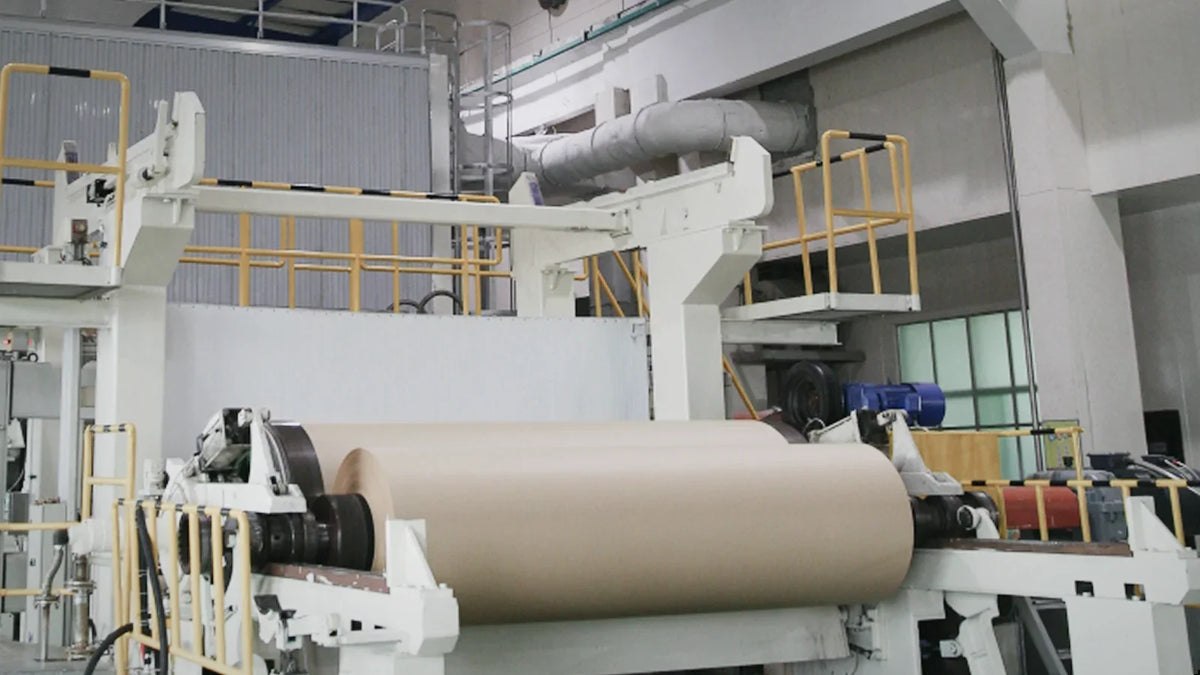
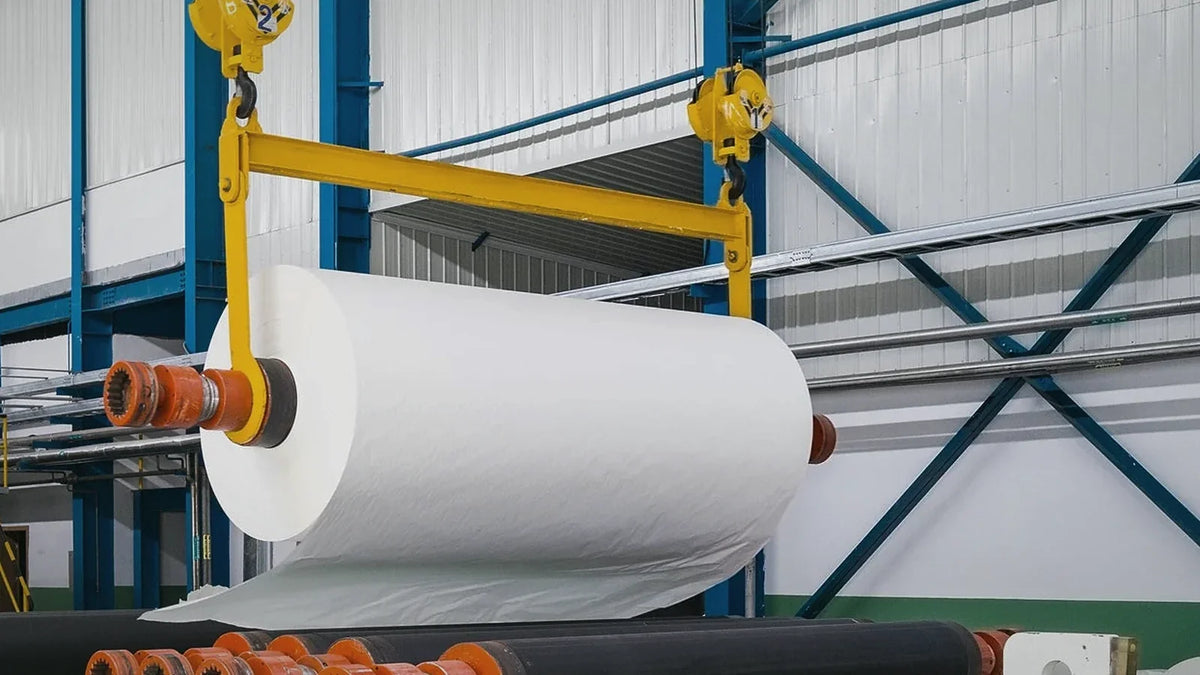
High-volume plate lines that interleave automatically run paper from reels slit to the line width; cut sheets suit manual or small-batch packing. A sheet the same size as the plate or larger leaves no coating uncovered at the edges.
For high-volume lines that interleave automatically. Specify width, outer diameter, core size and splices per reel.
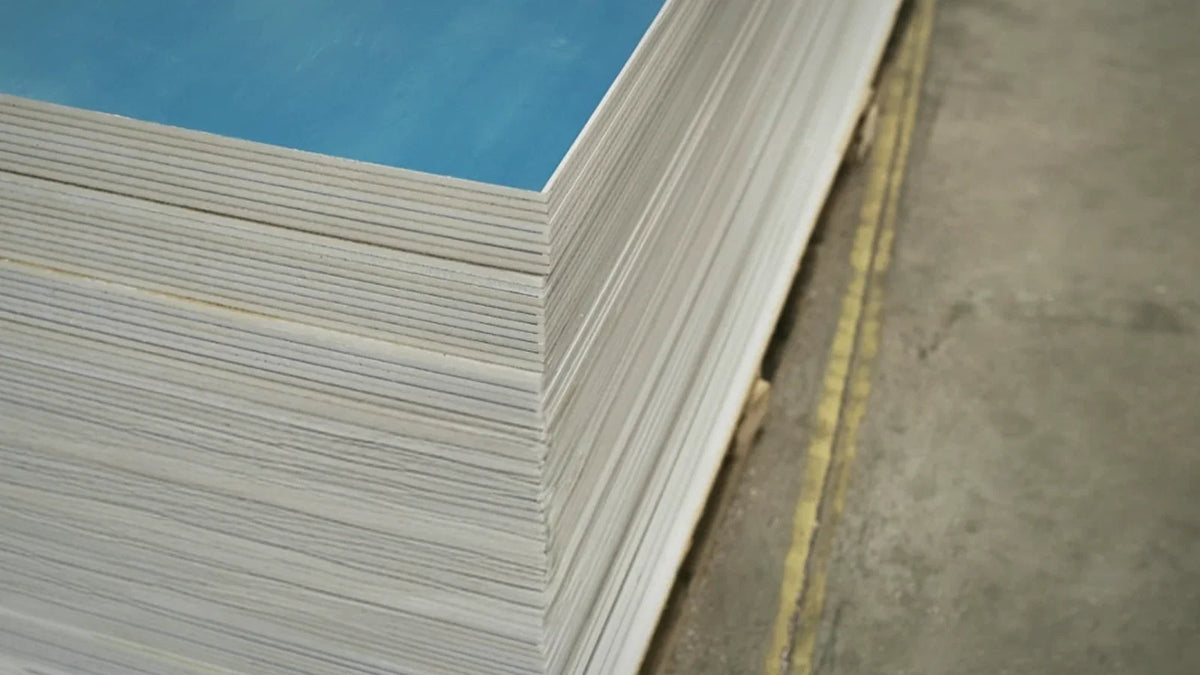
For manual or small-batch packing. Cut to the plate size or larger, so no coating is left uncovered at the edges.
For reels, specify:
- width and width tolerance
- outer diameter and core size
- maximum splices per reel, and how they are marked
- moisture-proof packaging for transport and storage
How should a plate maker qualify a new interleaving paper?
In five steps, from paperwork to the press.
- Check the paperwork. Compare the certificate of analysis and the technical data sheet with your specification, property by property and method by method.
- Age a stack. Interleave the paper with your own plates and store the stack under your usual conditions, then inspect the coating for colour change or spots. This is the compatibility test that matters most, because it puts the paper against your coating for as long as a real pack.
- Image and print. Image plates from the aged stack and check print quality on press.
- Run the loaders. Feed the paper through the platesetter models your customers use most.
- Approve on a pilot lot. Then fix the specification, the quality checks and the test frequency for each delivery.
Send your plate maker's interleaf specification
To check a grade against your coating, fill in Table 2 and send it with your plate maker's interleaf specification.
- Share your plate maker's interleaf specification, or Table 2 filled in for your coating.
- Tell us the plate type, grammage, reel width and annual volume.
- We quote CTP interleaving paper against your plate line.
FAQs
How is interleaving paper fed on a plate line?
High-volume plate lines interleave automatically from reels slit to the line width; cut sheets suit manual or small-batch packing. Specify reel width and tolerance, outer diameter, core size and the maximum number of marked splices per reel, or the sheet size, which should be at least the plate size.
What does CTP stand for in printing?
CTP stands for computer-to-plate. The image is sent from a digital file straight onto the printing plate by a laser or other light source in a platesetter, with no film stage in between. CTP is used mainly for offset printing. Thermal and violet plates are the two common types, and they differ in how sensitive they are to ordinary room light.
Can interleaving paper affect offset printing quality?
Yes, if it leaves specks or loose fibres on the coating, or reacts with it during storage. Both show up as imaging defects and spots in print. The quality data to check are the dirt count by size class, surface strength and extract pH and conductivity, and the aged-stack test with your own plates is the check that settles it.
Should CTP interleaving paper be acid-free?
Not necessarily. The right pH depends on the plate coating, and plate makers set their own ranges after testing paper against their plates. Ask the plate maker for the range and the extraction method, cold or hot, and check incoming paper against that, rather than relying on a general "acid-free" claim.
Why does interleaving paper stick to printing plates?
The usual causes are static, a dense sheet that holds a vacuum against the plate, moisture outside the specified range or a very smooth surface. Check air permeance, moisture and smoothness against the specification first. If sticking appears only on one platesetter model, run a trial there before changing the paper.
What basis weight is CTP interleaving paper?
Kaifeng's product pages list its CTP grade at 35–50 g/m² and its PS grade at 30–37 g/m². The right weight depends on plate size, the autoloader and the plate maker's specification. Heavier paper is stiffer and easier to lift, but means higher stacks and higher cost. Ask the plate maker for a grammage window with a ± tolerance, and confirm it on your own platesetters.
Can used interleaving paper be reused?
Reusing paper removed at the platesetter is not advisable for unexposed plates. Removed sheets can carry dust, creases or static, which are the defects the paper is meant to prevent, and nobody can check them sheet by sheet. Use fresh paper from a sealed reel or pack when plates are re-stacked, and keep removed sheets away from open plate stacks so loose fibres do not settle on them.
Compliance note: interleaving paper limits are set by the plate manufacturer's specification for its coating. Parameters quoted from Kaifeng product pages are subject to Kaifeng's current specification sheets and test reports.
Sources
- Fujifilm Graphic Communication. "Modern Offset Computer-to-Plate (CTP) Technology". Fujifilm, n.d. https://print-us.fujifilm.com/news-updates/cpt-upgrades/ Accessed Nov 2026.
- Fujifilm. "PlateRite 8600 / 8000II / 8100 CTP brochure". Fujifilm, n.d. https://www.fujifilm.com.tw/business/print/output/PlateRite_8600_CTP.pdf Accessed Nov 2026.
- Cepi-CTS. "Handbook 5:1 List of properties for which samples are provided and their indicative ranges" (Rev. 45). Cepi, 2026. https://www.cepi.org/wp-content/uploads/2026/05/HB51-Properties-list.pdf Accessed Nov 2026.
- TAPPI. "Dirt in paper and paperboard, Test Method TAPPI/ANSI T 437 om-25". TAPPI, 2025. https://imisrise.tappi.org/TAPPI/Products/01/T/0104T437.aspx Accessed Nov 2026.