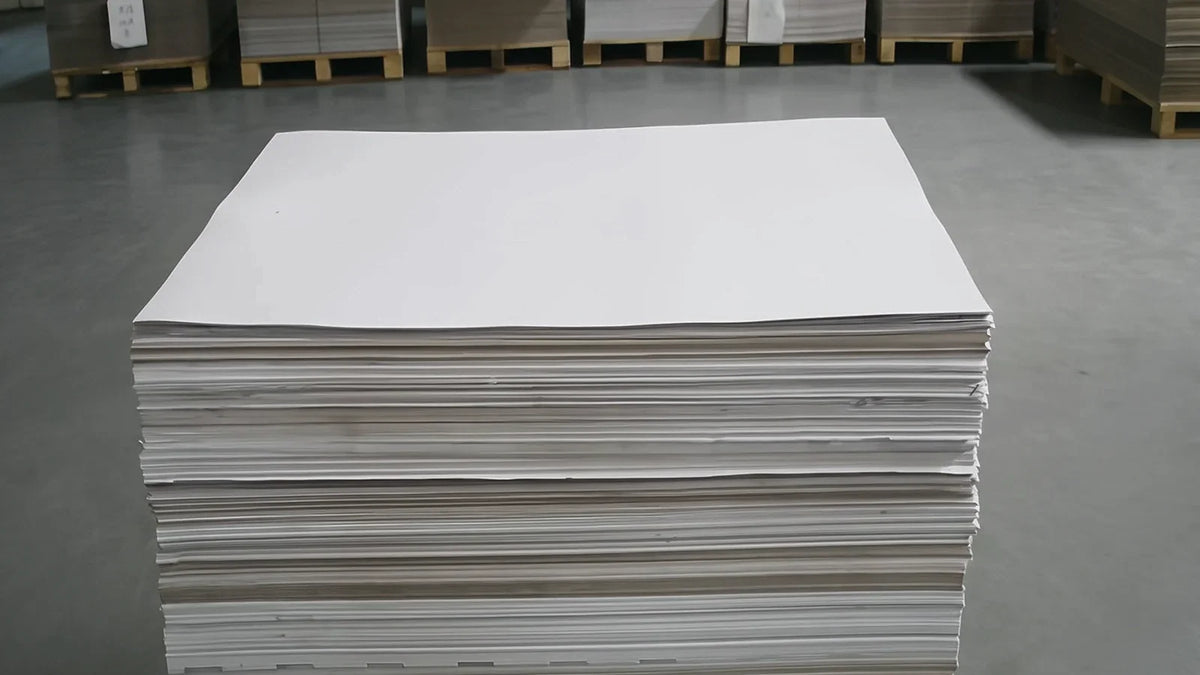
Sandwich Wrapping Paper: Grades, Sheet Sizes and Specs for Distributors

Sandwich wrapping paper comes in three grades: greaseproof for warm and oily fillings, wax-coated for chilled counters, and silicone parchment for anything reheated in an oven. US catalogues sell 12 × 12, 14 × 14 and 15 × 16 inch sheets; UK and EU catalogues list 350 × 225, 400 × 300 and 500 × 335 mm.
Which grade suits which sandwich?
Distributors who supply delis and cafés usually stock all three grades, because each one fails in a different way. Greaseproof paper slows fat through a dense sheet of hard-refined fibre [11]. Wax keeps out water and lets cold food come away cleanly, but softens with heat. Silicone parchment, sold in the UK as baking paper, is the only one of the three made for the oven.
Table 1. Sandwich wrapping paper grades by use
| Use | Greaseproof | Wax-coated | Silicone parchment |
|---|---|---|---|
| Chilled counter sandwiches | Works where fillings carry surface fat | First choice: keeps moisture in, opens cleanly | Works, but carries an oven rating that is not used |
| Hot, toasted or oily fillings | First choice for holding warm, oily food | Not suitable: wax softens with heat | Works |
| Wet fillings (tomato, dressing) | Choose a low Cobb value | Keeps water out | Choose a low Cobb value |
| Reheating in an oven | Only with its own heat rating | No | Yes, within its temperature and time |
| Printed, branded wraps | Widely printed | Printed by the wax coater or converter | Needs inks suited to a silicone surface |
| Format sold to cafés | Cut sheets, cutter-box rolls | Cut sheets, interfolded sheets | Cut sheets, rolls |
A café that toasts paninis and sells chilled baguettes needs two grades, not one. For a distributor, that usually means stocking greaseproof and wax-coated sheets in two or three sizes, and parchment for kitchens that reheat in the wrap.
Building a sandwich wrap range?
Tell us the grades and sheet sizes you stock, or the reel widths you convert, with monthly volumes. We quote the base paper for each line.

What sheet sizes do sandwich wrap catalogues list?
There is no single standard size, but catalogues repeat the same few. Table 2 lists sizes on sale in November 2026, with the pack counts as listed.
Table 2. Typical sandwich wrap sizes listed in UK, EU and US catering-supply catalogues, checked November 2026
| Market | Sheet size | Grade and pack as listed |
|---|---|---|
| US | 12 × 12 in (305 × 305 mm) | Dry wax, cases of 6,000 |
| US | 14 × 14 in (356 × 356 mm) | Kraft deli wrap, 4,000 per case |
| US | 15 × 16 in (381 × 406 mm) | Natural kraft deli wrap, 3,000 per case |
| UK | 350 × 225 mm | White greaseproof, 34 g/m², 1,920 per case |
| UK | 400 × 300 mm | White greaseproof, 1,000 per pack |
| UK | 250 × 350 mm | Brown greaseproof, 1,000 per pack |
| UK | 450 × 700 mm | Full greaseproof sheets, about 480 per ream |
| EU | 500 × 335 mm, also cut to 250 × 335 mm | White 38 g/m² or brown 40 g/m², 2,500 or 5,000 per case |
Two points for a range. US sizes are square or nearly square, suited to folding corner to centre; UK and EU sheets are often rectangular, sized for a baguette or a wrap. And the large metric sheets, 450 × 700 mm and 500 × 335 mm, are cut down by the user or by a converter, so one parent size can serve several smaller sheets.
To set a size for a particular customer, lay their largest sandwich across the diagonal of a candidate sheet: the corners should fold over the top with a few centimetres to spare.

How many sheets are in a kilo?
Sheets per kilo depend only on sheet area and grammage:
Sheets per kg = 1,000 ÷ (grammage in g/m² × sheet area in m²)
Table 3. Sheets per kilo for common sizes
| Sheet size | Area (m²) | 30 g/m² | 35 g/m² | 40 g/m² |
|---|---|---|---|---|
| 350 × 225 mm | 0.079 | 423 | 363 | 317 |
| 250 × 350 mm | 0.088 | 381 | 327 | 286 |
| 12 × 12 in | 0.093 | 359 | 308 | 269 |
| 400 × 300 mm | 0.120 | 278 | 238 | 208 |
| 14 × 14 in | 0.126 | 264 | 226 | 198 |
| 15 × 16 in | 0.155 | 215 | 185 | 161 |
| 500 × 335 mm | 0.168 | 199 | 171 | 149 |
The figures are theoretical and exclude cartons and wrapping; real counts move with the grammage tolerance. Use them to turn a price per kilo into a price per 1,000 sheets before comparing offers.
Which specification lines decide the grade?
Three lines separate a good sandwich wrap from a poor one, whatever the size:
- Grease resistance, usually given as a Kit level. In the TAPPI T 559 test, numbered solutions are applied to the paper and the rating is the highest-numbered one that stays on the surface [3]. The scale runs from 1 to 12. The test was designed as a surface screen, so set the level with a hold test on the fattiest sandwich at the real holding time.
- Water absorption, the Cobb value: the water a sheet takes up in a set time, usually 60 seconds [9]. Lower is better for tomato, dressings and chilled counters.
- Grammage: lighter sheets fold more neatly and give more sheets per kilo; heavier sheets hold their shape around a baguette. Most sandwich sheets in Table 2 sit between 30 and 40 g/m².
For converters buying reels to sheet or print, add reel width, core diameter, joins per reel and the printed side to the specification.
Can a wrapped sandwich go in an oven or toastie press?
Only in silicone parchment or another paper with a stated heat rating. German food-contact guidance sets the reference points. BfR Recommendation XXXVI covers paper and board for food contact used at up to 90 °C, such as holding and reheating [1]. Paper for baking falls under XXXVI/2, which expects the paper to withstand at least 220 °C for the intended heating time and not to be used above 220 °C [2]. Kaifeng's silicone-coated parchment grade, for example, is listed for use at 220 °C for 30 minutes.
A toastie press holds the paper against hot plates rather than in oven air, so test a parchment grade at the press's own temperature and time before stocking it for that use.
Which documents should a distributor hold for each grade?
- Declaration of compliance referring to Regulation (EC) No 1935/2004 [7], with good manufacturing practice under Regulation (EC) No 2023/2006 [8].
- BfR results: XXXVI for wraps, XXXVI/2 for parchment sold for oven use. Only the German text of a BfR recommendation is binding.
- Ink documents for printed wraps. Regulation (EC) No 2023/2006 sets good manufacturing practice rules for printing inks on the non-food-contact side [8].
- A third-party PFAS report for the exact grade. Since 12 August 2026, Article 5 of Regulation (EU) 2025/40 bars food-contact packaging from the EU market at or above 25 ppb for any single PFAS, 250 ppb for the sum of targeted PFAS and 50 ppm for total PFAS [5][6]. The limits apply in the EU and Northern Ireland, not in Great Britain [10].
- Recycling evidence before any claim on pack. The UK Confederation of Paper Industries says greaseproof and silicone papers cannot readily be pulped on high-volume standard paper machines [4].
Where does the base paper come from?
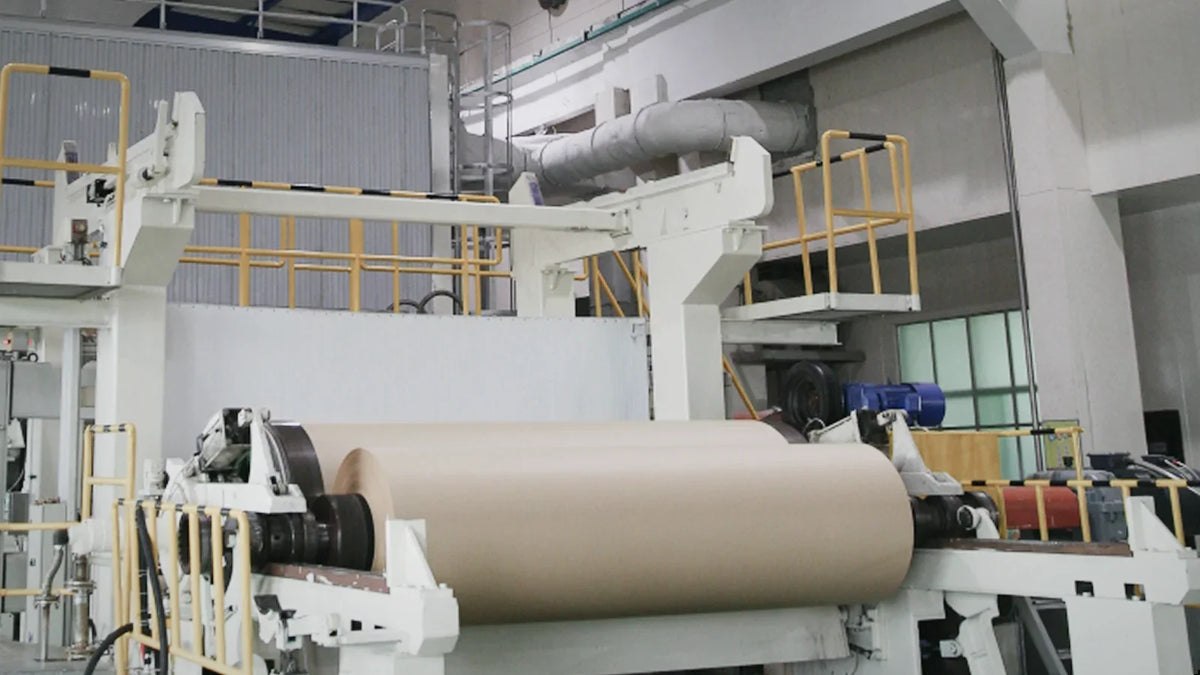
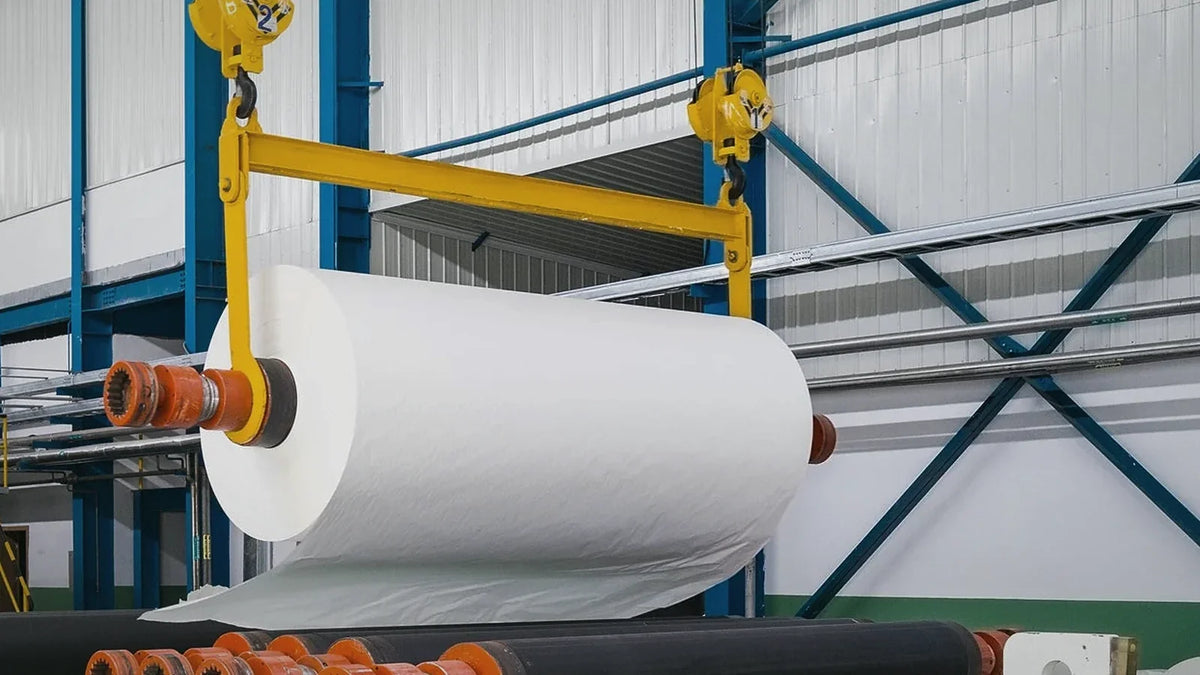
Most sandwich sheets reach cafés through three steps: a paper manufacturer makes the grade in reels, a converter sheets, prints or waxes it, and a distributor sells packs to food businesses. Wax paper in particular is waxed by a separate converter.
Base paper for your wrap range
For converters and distributors who buy from the reel, send your grades, sheet sizes and monthly volume for a quotation.
- List the grades: greaseproof, parchment, or base paper for waxing.
- Give reel widths or sheet sizes, grammage and monthly volume for each.
- We quote each line by the reel or by the sheet.
Base papers for sandwich wraps from Kaifeng
Related guideReading a Food Wrapping Paper Spec Sheet Line by LineFAQs
What size is sandwich wrapping paper?
There is no single standard. US catalogues sell 12 × 12, 14 × 14 and 15 × 16 inch sheets. UK and EU catalogues list metric sizes such as 350 × 225 mm, 250 × 350 mm, 400 × 300 mm and 500 × 335 mm, plus 450 × 700 mm full sheets that are cut down. Match the size to the largest sandwich it has to close around.
Which paper is used to wrap sandwiches?
Greaseproof paper for warm and oily sandwiches, wax-coated paper for chilled counter sandwiches, and silicone parchment for sandwiches reheated in an oven. Many delis use two of the three. Confirm the grade with a hold test on the fattiest and the wettest sandwich on the menu.
What is sandwich wrapping paper called?
Catalogues use sandwich paper, sandwich wrap, deli paper, deli wrap and greaseproof sheets for the same product. The name does not fix the material, so check whether a listing is greaseproof, wax-coated, parchment or kraft, and its grammage, before comparing prices.
Is greaseproof paper the same as parchment paper?
No. Greaseproof paper gets its grease resistance from a dense, hard-refined sheet and has no silicone. Silicone parchment, often sold in the UK as baking paper, carries a silicone coating that releases food and an oven rating. Both wrap cold or warm sandwiches; only parchment, or a greaseproof grade with its own heat rating, goes into an oven.
Can wax paper be used for hot sandwiches?
No. Wax softens with heat and can transfer to the food. Use wax-coated paper for chilled sandwiches and greaseproof paper or silicone parchment for anything hot or reheated.
How many sandwich wraps are in a kilo of paper?
It depends on size and grammage. At 35 g/m², a kilo holds about 363 sheets of 350 × 225 mm, 238 sheets of 400 × 300 mm or 308 sheets of 12 × 12 in. Divide 1,000 by the grammage multiplied by the sheet area in square metres for any other size.
Compliance note: whether a regulation applies depends on the final use of the packaging and on the competent authority in each market. Parameters quoted from Kaifeng product pages are subject to Kaifeng's current specification sheets and test reports. Catalogue sizes were checked in November 2026 and vary by supplier.
Sources
- German Federal Institute for Risk Assessment (BfR). "XXXVI. Paper and board for food contact" (as of 01.10.2026). BfR, 2026. https://empfehlungen.bfr.bund.de/recommendations/360/pdf?locale=en Accessed Nov 2026.
- German Federal Institute for Risk Assessment (BfR). "XXXVI/2. Paper and paperboard for baking purposes" (as of 01.10.2026). BfR, 2026. https://empfehlungen.bfr.bund.de/recommendations/362/pdf?locale=en Accessed Nov 2026.
- TAPPI. "Grease resistance test for paper and paperboard, T 559 cm-22". TAPPI, 2022. https://imisrise.tappi.org/TAPPI/Products/01/T/0104T559.aspx Accessed Nov 2026.
- Confederation of Paper Industries. "Recyclability Guidelines 2024". CPI, 2024. https://thecpi.org.uk/library/PDF/Public/Publications/Guidance%20Documents/Recyclability-Guidelines-2024.pdf Accessed Nov 2026.
- European Parliament and Council. "Regulation (EU) 2025/40 on packaging and packaging waste". EUR-Lex, 2025. https://eur-lex.europa.eu/eli/reg/2025/40/oj/eng Accessed Nov 2026.
- Food Packaging Forum. "PPWR PFAS limits apply from August 12". Food Packaging Forum, 2026. https://foodpackagingforum.org/news/ppwr-pfas-limits-apply-from-august-12 Accessed Nov 2026.
- European Parliament and Council. "Regulation (EC) No 1935/2004 on materials and articles intended to come into contact with food". EUR-Lex, 2004. https://eur-lex.europa.eu/eli/reg/2004/1935/oj/eng Accessed Nov 2026.
- European Commission. "Commission Regulation (EC) No 2023/2006 on good manufacturing practice for materials and articles intended to come into contact with food". EUR-Lex, 2006. https://eur-lex.europa.eu/eli/reg/2006/2023/oj/eng Accessed Nov 2026.
- TAPPI. "Water absorptiveness of sized (non-bibulous) paper, paperboard and corrugated fiberboard (Cobb test), T 441 om-24". TAPPI, 2024. https://imisrise.tappi.org/TAPPI/Products/01/T/0104T441.aspx Accessed Nov 2026.
- European Commission. "Commission Notice C/2025/946 on the application of Regulation (EU) 2025/40 in respect of Northern Ireland". EUR-Lex, 2025. https://eur-lex.europa.eu/eli/C/2025/946/oj/eng Accessed Nov 2026.
- Hubbe, M. A., and Pruszynski, P. "Greaseproof paper products: A review emphasizing ecofriendly approaches". BioResources 15(1), 1978–2004, 2020. https://bioresources.cnr.ncsu.edu/wp-content/uploads/2019/11/BioRes_15_1_1978_Hubbe_Pruszynski_Review_Greaseproof_Paper_Products_Review_Ecofriendly_Approaches_16707.pdf Accessed Nov 2026.