
Comparison: Water-based vs. PE-coated Paper
What are Water-based and PE-coated Papers?
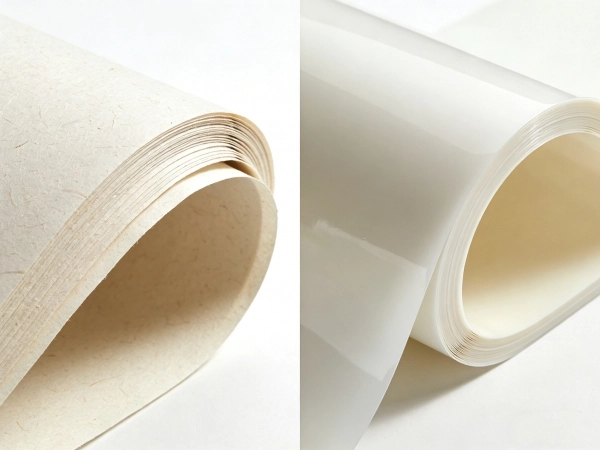
As someone who has spent decades in the paper industry, I often see beginners confused about the difference between water-based coated paper and PE-coated paper. At their core, both are forms of coated paper designed to improve barrier properties and surface performance, but their coatings are fundamentally different.
Water-based coated paper uses a layer of water-dispersible polymer applied directly onto the paper surface. This coating dries to form a thin, flexible film that enhances water and grease resistance without drastically altering recyclability. The process is environmentally friendlier because it avoids using heavy plastics and often reduces VOC emissions.
PE-coated paper, on the other hand, involves laminating a thin polyethylene (PE) film onto the paper. This creates a highly effective barrier against moisture and grease but makes the paper less adaptable for recycling. The PE layer can vary in thickness, and thicker coatings increase durability but decrease flexibility in processing.
Understanding these differences is crucial when selecting the right paper for food packaging, medical products, or other sensitive applications.
Which Paper Resists Moisture and Grease Better?
Barrier properties are often the deciding factor when choosing a coated paper. In my experience working with food packaging manufacturers, PE-coated paper consistently outperforms water-based coated paper in blocking moisture, grease, and even light oils. Its continuous plastic layer prevents liquids from penetrating, making it ideal for greasy foods like fast food wrappers or oily snacks.
Water-based coated paper provides moderate resistance. It works well for items with low moisture content, such as dry snacks, tea bags, or bakery liners. The coating is thin, which allows some absorption, but it is still effective enough for most general packaging purposes.
From a practical perspective, the choice depends on the product's sensitivity: high-fat or wet products usually require PE-coated paper, while low-moisture goods can safely rely on water-based coatings.
Which Paper Prints and Processes Better?
Printability and process performance are critical in packaging production. Water-based coated paper generally offers excellent ink adhesion, especially for flexographic and gravure printing. Its smooth surface provides bright, sharp colors, and the coating allows fast drying with minimal smudging.
PE-coated paper presents more challenges. The plastic surface can resist conventional inks, requiring specialized coatings or primers for high-quality prints. Folding and cutting also require careful handling because the PE layer can crack under tight bends if the coating is too thick.
In manufacturing environments, water-based coated paper is often preferred for high-speed printing lines due to its adaptability and ease of processing. PE-coated paper shines where barrier performance is the priority, but print quality might need additional preparation.
Which Paper is More Environmentally Friendly?
Environmental considerations are increasingly important in the paper industry. Water-based coated paper generally has a lower ecological footprint. Its coatings are often biodegradable or recyclable, and the paper can usually be repulped and processed in conventional recycling systems.
PE-coated paper is less environmentally friendly. While it excels in durability and barrier properties, the polyethylene layer complicates recycling. Many facilities cannot process it efficiently, which can lead to higher waste levels unless specialized separation processes are in place.
From my professional perspective, if sustainability is a key concern—especially for brands marketing eco-conscious packaging—water-based coated paper is usually the safer choice. It strikes a balance between performance and environmental responsibility.
How to Choose between Water-based and PE-coated Paper?
Choosing the right paper involves balancing performance, cost, and environmental priorities. Here are some tips from years of experience:
• Product type: High-moisture or greasy foods favor PE-coated paper, while dry or low-moisture goods suit water-based coatings.
• Printing needs: For vibrant, high-quality printing on high-speed lines, water-based coated paper is often easier to work with.
• Sustainability goals: Brands with eco-conscious positioning will benefit from water-based coated options.
• Budget considerations: PE-coated paper may have higher raw material costs and recycling challenges, while water-based coated paper can be more economical in production and disposal.
Ultimately, there is no universal “better” choice. The ideal paper is the one that aligns with your product requirements, manufacturing capabilities, and environmental strategy.