
What Determines the Porosity of Cigarette Tipping Paper?
After working with cigarette paper and tipping paper specifications for many years, one lesson becomes very clear: porosity is never accidental.
For beginners entering the field—whether from a manufacturing, purchasing, or product development background—porosity may seem like a single number on a datasheet. In reality, it is the outcome of material choices, papermaking processes, and deliberate controls.
This article breaks down, step by step, what truly determines the porosity of cigarette tipping paper, and why each factor matters in real-world production.
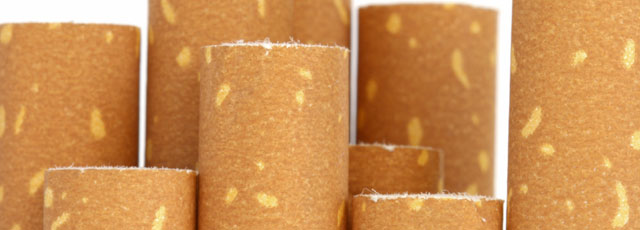
Fiber Type and Porosity Formation
Everything starts with the fiber.
In cigarette tipping paper, cellulose fiber selection plays a decisive role in forming the initial pore structure. Long fibers tend to create a more open network, while shorter or highly fibrillated fibers pack more tightly, reducing air permeability.
From experience, beginners often underestimate how much fiber morphology influences porosity. Fiber length, width, and flexibility all affect how fibers overlap and bond during sheet formation. Even when two papers have the same basis weight, different fiber blends can produce very different porosity values.
Another important consideration is fiber purity. Highly purified cellulose fibers generally produce more consistent and predictable porosity, which is why they are commonly used in cigarette tipping paper intended for precise ventilation control.
Beating and Sheet Formation
If fiber type sets the foundation, beating (refining) defines the structure.
Beating increases fiber surface area and flexibility, allowing fibers to bond more closely. As beating intensity increases, pores become smaller and airflow resistance rises. Insufficient beating, on the other hand, leads to loose fiber bonding and unstable porosity.
Sheet formation quality is equally critical. Poor formation creates uneven pore distribution, which can cause inconsistent air dilution in finished cigarettes. From years on production floors, I can say that uniform formation is one of the most underrated contributors to stable tipping paper porosity.
For beginners, it helps to remember this rule:
More refining + better formation = lower, more controlled porosity
Less refining + poor formation = higher but unstable porosity
Basis Weight and Paper Density
Once fibers are refined and formed, basis weight and density take over as the next major determinants.
Higher basis weight generally means more fibers per unit area, which naturally reduces pore size. However, porosity is not governed by weight alone—paper density matters just as much. Two tipping papers with identical basis weights can have very different porosity values if one is more compacted during pressing and drying.
In practice, manufacturers adjust pressing pressure and drying tension to balance:
• Required porosity
• Mechanical strength
• Dimensional stability
For newcomers, this explains why porosity cannot be “fixed” simply by changing grammage. It is always the interaction between thickness, density, and fiber packing that defines airflow behavior.
Additives and Porosity Control
After the paper structure is formed, additives provide fine control.
Fillers such as calcium carbonate can partially block pores, reducing air permeability, while certain functional additives help stabilize pore distribution across large production volumes. In cigarette tipping paper, additives are not used randomly—they are carefully dosed to maintain consistency from batch to batch.
Wet-end chemistry also affects fiber bonding and pore uniformity. From my experience, small changes in additive dosage can cause measurable shifts in porosity, especially in high-speed production environments.
For beginners, this is an important lesson: porosity control is incremental, not dramatic. Additives fine-tune what fiber and process conditions have already established.
Porosity in Cigarette Performance
Ultimately, porosity matters because of how cigarettes perform.
Tipping paper porosity directly affects:
• Air dilution rate
• Smoke delivery
• Draw resistance
• Regulatory compliance
Too high porosity can weaken taste and alter burn characteristics. Too low porosity may increase tar and nicotine delivery beyond acceptable limits. This is why cigarette brands specify tight porosity ranges for tipping paper suppliers.
In modern cigarette design, porosity is not just a physical property—it is a functional requirement that links materials, manufacturing, and consumer experience.
From years of working with both manufacturers and buyers, I can confidently say that understanding porosity is one of the fastest ways for beginners to gain credibility in this field.